

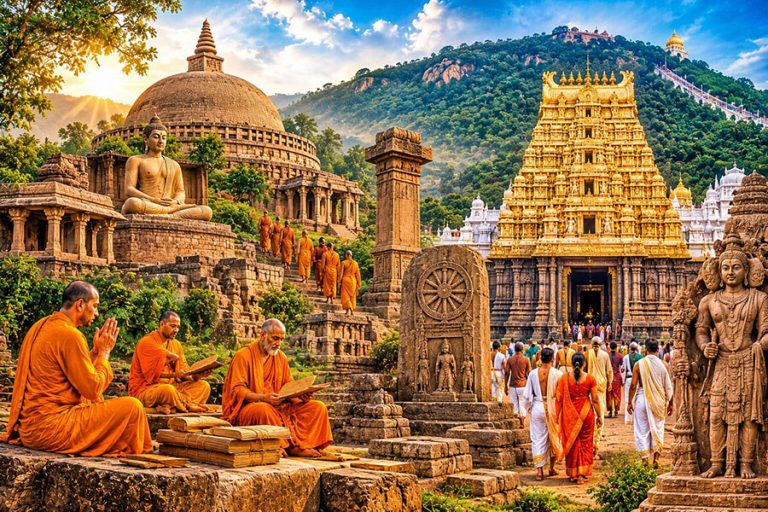
Balangir: October 29, 2026 : During the reign of Emperor Ashoka and the period that followed, Buddhism spread very rapidly across southern India. In the border regions of Andhra Pradesh and Tamil Nadu, there are many ancient Buddhist sites (such as Amaravati and Nagarjunakonda).
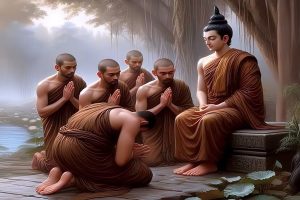
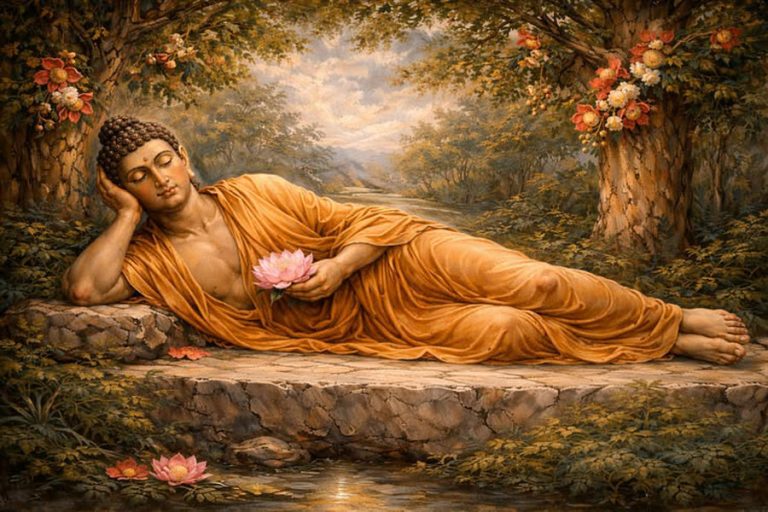
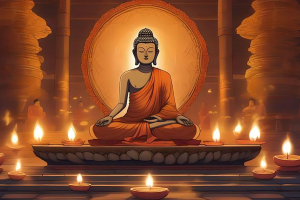
According to archaeologists, historians, and researchers, in ancient times a large Buddhist vihara (monastery) was built by Emperor Ashoka on the Tirumala hills and in its secluded natural surroundings for Buddhist monks to practice meditation and asceticism, as well as for the ritual of tonsure (Mundan or head shaving—known in Pali as Pabbajja and Samanera), which serves as the first step toward taking monastic vows.
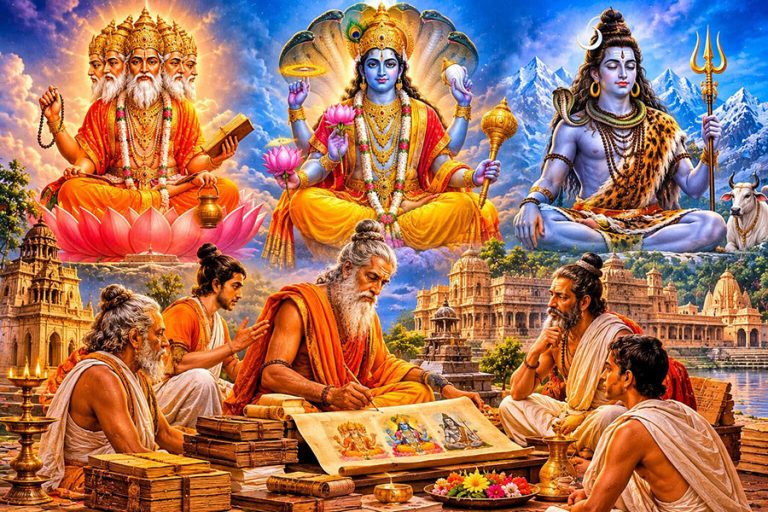
At various points in history, when the influence of Buddhism began to decline and Brahmanism was re-established in the country, the Tirumalai Buddhist vihara was destroyed by Brahmanists in order to wipe out Buddhism. Later, numerous mythological stories were composed in the name of the deities Vishnu and Lakshmi:
(a) The black stone statue of the Buddha installed in the Tirumal Buddhist vihara was transformed into the figure of Venkateswara (Tirupati Balaji), depicted as an incarnation of Vishnu.
(b) A temple of Tirupati Balaji (Tirumala) was built over the ruins, converting the world-famous Tirumalai Buddhist pilgrimage site of southern India into a center of Vaishnavism.
Detailed information related to this is presented below.
(1) Emperor Ashoka and the Tirumalai Buddhist Vihara of South India :
(a) The world’s most powerful Buddhist state: During Emperor Ashoka’s long 36-year reign from 268 BCE to 232 BCE, the Mauryan Empire was recognized on the world stage as the largest, most prosperous, and most powerful Buddhist empire in the world. At that time, roughly 95 percent of the citizens of the Mauryan Empire were followers of Buddhism.
(b) Establishment of the Tirumalai Buddhist vihara: During the reign of the great Mauryan Emperor Ashoka, many Buddhist viharas and centers of learning were established across the country to propagate and spread Buddhism. Along these lines, a massive Buddhist vihara was constructed in the sacred hill area of present-day Tirupati–Tirumalai.
(2) The Traditions of ‘Pabbajja’ and ‘Samanera’ and the Buddhist Transformation of the Mauryan Empire :
In Buddhism, tonsure (Mundan or head shaving) is a very important and sacred practice. In Pali, this is commonly referred to as Pabbajja and Samanera, or the first step toward entering monastic life.
(a) Meaning of the term ‘Pabbajja’: Pabbajja is a Pali word whose literal meaning is “going forth from home” or “renouncing worldly life.”
Significance in Buddhism: In the Buddhist monastic tradition, when an ordinary householder renounces home, family, and worldly attachments to enter the Buddhist Sangha and takes preliminary monastic vows, that process or ordination is called Pabbajja.
(b) Meaning of the term ‘Samanera’: In Pali, Samanera means a “Buddhist novice” or “young ascetic.”
Significance in Buddhism: After receiving Pabbajja, a person first becomes a Samanera (novice monk). Before becoming a full Bhikkhu in the Sangha, they remain in a stage of questioning, study, and training. Once they reach the required age and qualifications, these Samaneras are later ordained as full Bhikkhus.
(c) A major stage in life: Traditionally, followers of Buddhism spend some time in monastic life at least once in their lives—usually before marriage or adulthood, for a period ranging from a few days or months up to a year. This cultivates maturity, a sense of responsibility, and deep devotion to the Dharma.
(3) Emperor Ashoka’s Foresight and the Transformation of the Mauryan Empire into a Land of the Buddha :
(a) Arrival of Buddhists from the Mauryan Empire and abroad: This ancient Tirumalai Buddhist vihara was not merely a place of prayer; it was also a world-renowned center for receiving Pabrajja and Samanera ordination. At that time, followers of Buddhism from across the Mauryan Empire and various parts of Asia who wished to learn renunciation, discipline, and Buddhist philosophy came to this sacred place.
(b) Spread of Buddhist values across Asia: When Pabrajja and Dharma education programs were conducted on such a large scale across numerous Buddhist viharas, stupas, and shrines under Emperor Ashoka’s encouragement and guidance, ideals of non-violence (ahimsa), compassion (karuna), discipline, and morality awoke in everyday life and spread deeply across the Mauryan Empire and throughout Asia.
(c) Transformation into a Buddhist state: Every year, thousands of young people and citizens connected with Buddhist culture and the Sangha through this tradition. As a result of this spiritual and social movement, the entire Mauryan Empire gradually became a peaceful and genuinely great empire of Buddhist culture, influencing all of Asia.
(4) The Decline of Buddhism and the Return of the Era of Brahmanism :
(a) Betrayal and downfall: In 185 BCE, after the ninth and last emperor of the Mauryan dynasty, Brihadratha Maurya, was assassinated through treachery and betrayal by his chief Brahmin commander-in-chief, Pushyamitra Shunga, the Mauryan Empire came to a permanent end.
(b) Severe persecution of Buddhism: After Pushyamitra Shunga ascended the throne as the first ruler of the Shunga dynasty, Brahmanism was re-established in the country and the full military power of the state was turned toward destroying Buddhism. Through this, Buddhism declined and the era of Brahmanism returned, continuing to the present day.
(c) From that period onward, Brahmins were installed in royal councils in place of Buddhist monks. Driven by their instigation at that time, hundreds of thousands of Buddhist monks (bhikkhus) and nuns (bhikkhunis) were brutally killed in an effort to erase Buddhism from its roots in the country.
Eighty-four thousand Buddhist statues, stupas, viharas, and shrines across the country—including the Buddhist vihara at Tirumala built by Emperor Ashoka—were completely destroyed. Many ruined shrines of the Buddha were seized by Brahmanists and temples were constructed on them.
(5) The Descent of Vishnu and Mahalakshmi in Human Form in the Tirumal Hills During Kali Yuga :
To reclaim the ruins of the Buddhist vihara in the Tirumal hills and turn it into a temple of Vishnu, Brahmanists composed a dramatic fictional story in the Shrimad Bhagavata Purana and the Padma Purana claiming that Vishnu and Mahalakshmi had descended into the Tirumal hills in human form during Kali Yuga. Details related to this are presented below.
(a) The dramatic story of the Brahmin sage Bhrigu testing the Trimurti: According to the Puranas, a great yajna (sacrifice) was organized on the banks of the Saraswati River during the Vedic period at the start of Kali Yuga. Many sages and Brahmins gathered there with their teacher, Sage Bhrigu, to take part.
At that time, Sage Narada arrived from the sky and asked all the gathered sages and Brahmins who among the Trimurti—Brahma, Vishnu, and Maheshwara (Shiva)—was supreme, and to whom they would offer the fruits of the sacrifice as the foremost master.
None of the assembled sages and Brahmins could decide the answer to Narada’s question. Finally, a large assembly was held and it was unanimously decided that the Brahmin sage Bhrigu would test the three deities to determine who among them was supreme.
(b) Testing of the three deities by Sage Bhrigu: Curse on Brahma and limited temples: Taking on this task, Sage Bhrigu first decided to test Brahma. He went to Brahmaloka to meet Brahma. Upon arriving in Brahmaloka, the sage deliberately showed great disrespect toward Brahma.
Brahma became angry and wanted to punish the sage, but his consort, Saraswati, understood the sage’s intent and saved him from Brahma’s wrath. Angered by Brahma’s disrespect, Sage Bhrigu cursed that no one would worship Brahma in Kali Yuga. To this day, there are very few temples dedicated to Brahma (with the Brahma Temple in Pushkar cited as a rare exception).
(c) Testing of Shiva on Mount Kailash and background of Linga worship: Next, Sage Bhrigu decided to visit Shiva on Mount Kailash. Upon reaching Mount Kailash, Nandi stopped him from entering because Shiva and Parvati were engaged in romantic intimacy at that time.
After waiting for a long time without being able to meet him, Sage Bhrigu cursed that Shiva would be worshipped only in the form of a Linga. In Kashi, only the Mahamrityunjaya Temple is said to have an idol form of Shiva more than 400 years old.
(d) Kick on Vishnu’s chest in Vaikuntha and origin of the Srivatsa mark: Next, to test Vishnu, the sage arrived at Vaikuntha Dham. He entered the abode without Vishnu’s permission and saw that the deity was resting. The sage told him to wake up, but Vishnu was in deep sleep.
After waiting for a long time and seeing no response, the sage struck Vishnu’s chest with his foot. That strike by Sage Bhrigu left a footprint on the deity’s chest, which became known as Shrivatsa.
After the kick, Vishnu woke up and understood what had happened. Knowing that the sage had struck him with his foot, Vishnu asked, “O Sage, is your foot hurt? My chest is strong, but your foot is not so strong.” Seeing Vishnu’s humility, Bhrigu was pleased and declared him supreme among the three deities.
(e) Anger of Mahalakshmi and curse upon Brahmins: According to Hindu scriptures, Mahalakshmi, the goddess of prosperity and consort of Vishnu, was also present in the abode and witnessed the entire incident. She could not tolerate Sage Bhrigu’s disrespect toward Vishnu and cursed that from that day onward she would never go to Brahmins and that they would all live in poverty and lack of wealth.
Hearing this curse from Mahalakshmi, the sage explained the true purpose of his visit and expressed remorse. Mahalakshmi then told the sage that her curse would follow Brahmins, except when a Brahmin worships Vishnu, at which time they would be free from the curse.
(f) Lakshmi’s hurt pride and departure to the earthly realm: Even though Sage Bhrigu had struck Vishnu’s chest—where Lakshmi resides—Vishnu neither punished the sage nor avenged Lakshmi’s insult.
Because of this, Lakshmi became very angry and hurt that he had not upheld the honor of her place. Therefore, she left Vaikuntha and went to the Tirumal hill region of southern India on Earth (Martya). Distressed by separation from Lakshmi, Vishnu also left Vaikuntha and descended to that region of southern India in human form as Srinivasa.
By composing this fictional story, the public was misled into believing that Vishnu and Lakshmi lived in human form in the Tirumalai hills.
(6) Presenting a Buddha Statue as the Statue of Tirupati Balaji :
This story is narrated in Brahmanical Puranas, primarily the Varaha Purana and the Venkatachala Mahatyam section of the Bhavishyottara Purana.
(a) Vishnu’s penance inside an anthill: According to the mythological account, while searching for Lakshmi, Vishnu reached the Seshachalam (Tirumala) hills in southern India. There, to win Lakshmi back and stay away from worldly illusion, he decided to perform deep penance in solitude.
During that penance, Vishnu took the form of a black stone statue, entered a natural anthill, and remained absorbed in meditation for a long time, cut off from the outside world.
(b) The cowherd and the miraculous cow: A local king (a Chola king) of that region had many cows, which a cowherd took into the forest every day to graze. Among those cows, one particular cow went to that anthill every day and poured all of its milk over it. Because of this, when the cow returned home each evening, no milk remained.
(c) The cowherd’s anger and strike with an axe: The news that the cow was not giving milk reached the king, who held the cowherd responsible and ordered him punished. To find out why the cow was not giving milk day after day, the cowherd secretly followed the cow one day. He saw the cow go on its own and pour milk over the anthill.
Seeing this, the cowherd flew into a rage, thinking the cow was doing this deliberately. Driven by anger, he immediately struck the anthill hard with an axe he was holding. However, the axe hit the head of Srinivasa hidden inside the anthill, causing blood to flow from the deity’s head.
(d) Arrival of the king and manifestation of the deity: Seeing blood coming out of the anthill, the cowherd became terrified and fainted on the spot. Upon receiving news of this, the king of that time (the Chola king) rushed there. The king saw that the cowherd was innocent regarding that supernatural event. When the king felt remorse for the unwitting mistake and asked the deity for forgiveness, Srinivasa broke out of the anthill and appeared before them in his true form.
(e) Connection with today’s worship rituals: To heal the wound caused on the deity’s head by the axe blow, the king and Brahmins applied a paste of Pacha Karpooram (camphor) and sandalwood on the statue.
That tradition continues today. Every day in the sanctum sanctorum (garbhagriha) of the Tirupati temple, a paste of camphor and sandalwood is applied to the face of the statue. In this way, by applying a paste of camphor and sandalwood to the face of a Buddha statue, it was presented as the statue of Tirupati Balaji.
(7) Transformation of the Buddha Statue into Vishnu (Sri Venkateswara) by Ramanujacharya :
This story is narrated mainly in the Varaha Purana and Venkatachala Mahatyam of the Bhavishyottara Purana, as well as in Vaishnava texts (such as hagiographies of Acharya Ramanuja and sthalapuranas). According to tradition, Saint Ramanujacharya brought about changes to this statue in the 12th century.
(a) Dispute over worship practices and features of the Sri Venkateswara or Balaji idol: At that time, there were differences of opinion and confusion among people of various sects regarding the worship practices and physical features of the main deity, Sri Venkateswara or Balaji, worshipped in the temple. Some argued it was a shrine of Shiva, while others considered it a form of Shakti or Vishnu. Because of this confusion, a complex social and religious dispute arose over which method of worship—Shaiva, Shakta, or Vaishnava—should be followed in the temple.
(b) Saint Ramanujacharya’s divine test (spiritual resolution): The test of placing the Shankha (conch) and Chakra (discus): Ramanujacharya proposed that the deity itself would decide who it was. That night, he placed two divine symbols of Vishnu—the Shankha and Chakra—near the statue and sealed the sanctum sanctorum of the temple.
When the temple doors were opened the next morning, everyone was amazed to see the main statue holding Vishnu’s famous Shankha and Chakra in its hands.
(c) Resolution and permanent arrangement: After this miraculous event, all doubts and disputes ended. It was taken as clear that this sacred shrine belonged to Vishnu (Sri Venkateswara). Following this, Ramanujacharya strictly established Vaishnava customs and worship practices there.
According to Brahmanical mythological accounts, in the 12th century Ramanujacharya attached two additional artificial arms to the Buddha statue, placed the Shankha and Chakra in them, and transformed it into the form of Tirupati Balaji.
(8) Srinivasa’s Loan from Kubera for Marriage and the Practice of Hundi Offerings :
This story is described in detail in the Varaha Purana, the Bhavishyottara Purana, and its Venkatachala Mahatyam.
(a) Srinivasa incarnation and marriage with Padmavati: Distressed by separation from Lakshmi, Vishnu took human form as Srinivasa and began meditation and penance in a cave on the Seshachalam hills (Tirumala) in southern India.
At that time, the ruler of that region was Akasharaja. He had a very beautiful daughter named Padmavati (who had been Vedavati in a previous birth and was an aspect of Lakshmi). One day while out hunting, Srinivasa saw Princess Padmavati in the forest, and they fell in love.
To marry Padmavati, Srinivasa needed a great deal of money and resources. Compelled by circumstances, he took a massive loan (karja) of wealth from Kubera, the lord of wealth, on the condition that he would pay interest to Kubera until the end of Kali Yuga. After this, with Akasharaja’s consent, he married Princess Padmavati.
(b) Naming as Venkateswara and the mystery of Hundi donations: When Lakshmi learned of this marriage afterward, she also came to Tirumala. It is said that both Lakshmi and Padmavati stayed there with Vishnu, and he became established there as Venkateswara (“remover of sins”).
Religious belief holds that the huge loan taken from Kubera has not been fully repaid until the end of Kali Yuga. Therefore, to help the deity repay the interest on that loan, thousands of devotees donate money, gold, and silver every day into the Hundi (donation box) of the Tirupati temple.
The narrative claims that Srinivasa took a large loan from Kubera to marry Padmavati and remained in Tirumala because he could not repay it, which is presented in Brahmanical texts as a way to exploit devotees at the Tirupati Balaji temple to this day.
(9) Sri Adi Varaha Swamy and the Mythological Significance of the Tirumala–Tirupati Region :
This story is based primarily on the Varaha Purana. It describes Vishnu’s third incarnation—the Varaha avatar—and the mythological significance of the Tirumala–Tirupati region.
(a) Varaha avatar and rescuing the Earth: According to the Puranas, at the beginning of Satya Yuga, a demon named Hiranyaksha abducted the Earth and carried it into the depths of the ocean. To save the Earth, Vishnu took his third incarnation, Varaha (a boar or wild boar).
Varaha entered the ocean, fought a fierce battle with the demon Hiranyaksha, and slew him. Using his large tusks, he safely lifted the Earth back up and placed it in its proper position.
(b) Permanent abode of Varaha Swamy on Tirumala hill: After rescuing the Earth, Varaha decided to stay in that sacred place. The place where this mythological event occurred came to be called Varahakshetra. Varaha manifested in divine form on these hills, which later became famous as Tirumala.
(c) Arrival of Srinivasa (Venkateswara) and permission from Adi Varaha: When Vishnu descended to Earth in Kali Yuga as Srinivasa or Venkateswara, he wished to stay in this Varahakshetra.
The story of asking for space: Because this place originally belonged to Adi Varaha Swamy, Srinivasa first went to Adi Varaha Swamy and asked for a small place (spot) to stay. Pleased, Adi Varaha Swamy granted him permission to reside there.
(d) Oldest and foremost tradition of the Tirupati temple: Honoring this mythological account, a strict and sacred tradition is observed at the Tirupati temple to this day:
(1) Visiting Adi Varaha first: It is a rule for every devotee going to Tirumala that before having darshan of Sri Venkateswara at the main temple, they must visit the Sri Adi Varaha Swamy temple there for darshan and worship.
(2) Core purpose behind this tradition: Because Sri Adi Varaha Swamy is considered the original owner or first authority over that land, seeking his permission and worshipping him first is considered essential. Only then is the darshan of Sri Venkateswara believed to be complete and fruitful.
The Tirumalai hill was recognized across the world as a shrine of the Buddha. Therefore, Brahmanists presented the above narrative of Varaha Swamy—claiming that Vishnu had resided there since Satya Yuga—to transform the Tirumalai hill region into a shrine of Vishnu.
(10) Conversion of Buddhist Traditions into Vaishnava Traditions :
While the Tirumala hill was once a center of Buddhist and Shramana culture, in later times it became a shrine of the Vaishnava deity Venkateswara. Certain practices of Buddhist culture remain there today in modified forms, practiced under the name of Vaishnava tradition.
(a) Similarities between Buddhist philosophy and Tirupati traditions: Renunciation of ego and tonsure (Mundana): Buddhist monks shave their heads to renounce worldly illusion and ego. Similarly, lakhs of devotees coming to Tirupati offer their hair (keshadaan) while setting aside ego and pride.
(b) Equality and social reform: Buddhism has always raised its voice against caste discrimination. At the Tirupati temple, people from all corners of the world gather to have darshan without distinctions of caste, religion, or class.
Because the ancient Shramana culture of Buddhism had been practiced there for a long time, Brahmanists adapted these practices into different forms and kept them active as Vaishnava traditions.
(11) Tirupati Balaji Temple: Historical Social Deception by Brahmanists :
In Indian religious and cultural history, the Tirupati Balaji temple is regarded as one of the most discussed and sacred shrines. However, regarding the origin of this famous temple and the design of its idol, Buddhist history and researchers have put forward several notable and provocative claims.
(a) Transformation of a Buddha statue into a Tirupati statue: Idol design: The hand postures (mudras) and body proportions of the main idol worshipped at the Tirupati temple are described as closely resembling ancient Buddhist statues. When the Buddhist statue was presented as a statue of Tirupati Balaji, its original structure had two arms.
Later additions: In the course of historical change, when these regions came under Brahmanical and Puranic religious traditions, Shankha, Chakra, and other Vaishnava symbols were added to that ancient statue by Ramanujacharya, transforming it into the form of Sri Venkateswara or Vishnu.
Revelation of the Buddha statue: The claim states that if all garments and ornaments were removed from the Sri Venkateswara idol today, the statue of the Buddha would clearly appear as its true form before the public.
(b) Fictional deities and scriptures: The text asserts that all content written in Brahmanical scriptures regarding Vishnu and Lakshmi, Sri Venkateswara, Sri Adi Varaha Swamy, the Srinivasa and Padmavati incarnations, the Tirupati Balaji temple, various customs and rituals, and Srinivasa’s loan from Kubera is based on fictional stories meant to mislead ordinary people in the name of religion and deities, with no factual truth.
(c) Social deception in the name of religion and deities: Over time, due to political and social changes, the influence of Buddhism in southern India began to decline. At that time, instigated by Brahmanists serving in royal councils, subsequent rulers took complete control of the Tirupati Balaji Buddhist vihara along with many other ancient Buddhist centers.
By forcibly establishing Vaishnava worship practices there, Buddhist culture was destroyed; the Sri Venkateswara Swamy temple at Tirumalai is cited as a prime example of what was, from a historical perspective, a major social deception.