






Balangir: August 12, 2026 : In past times, roughly between the 6th and 10th centuries, in regions such as Karnataka, Tamil Nadu, Andhra Pradesh, and Maharashtra in India, young girls from Dalit society aged 5 to 6 were widely subjected to physical exploitation by people of the Aryan race inside temples under the name of the Devadasi system.
Later on, this practice was introduced across the entirety of India. Thousands of Devadasis resided in many large temples throughout the country. Brahmanical elements used temples in a manner akin to brothels to serve their own self-interests.
To know detailed information about the Devadasi system, one needs to understand the exact answers to the following questions thoroughly:
- What was the Devadasi system?
- How did Brahmanical elements plan to capture young girls to make them Devadasis?
- What is the tragic story of young girls who lived as Devadasis?
- What was the historical background of the Devadasi system?
- What legal provisions have been enacted to abolish the Devadasi system?
The detailed subjects mentioned above are presented comprehensively below:
(1) What was the Devadasi system?
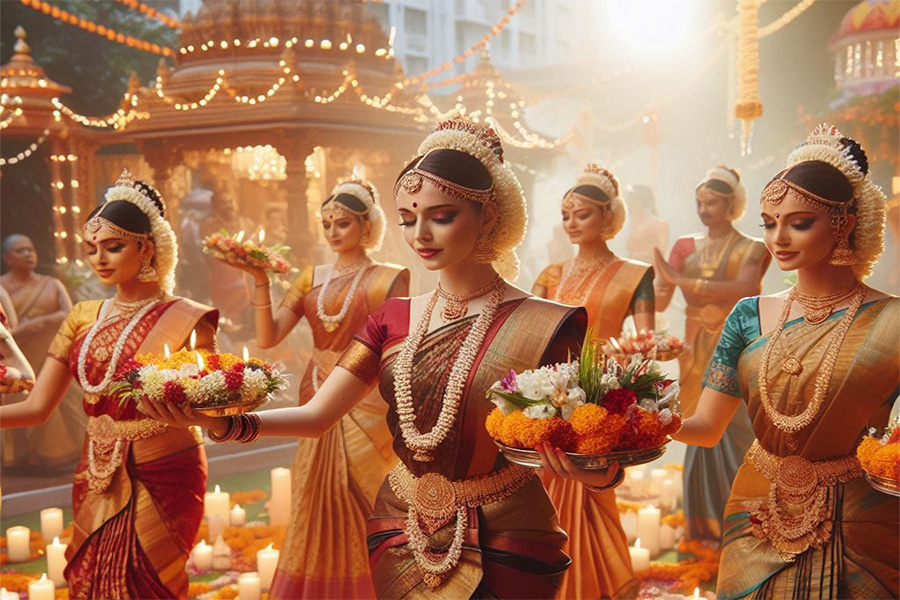
(a) Under the Devadasi system, young girls aged 5 to 6 from Dalit society were married off to deities under religious pretexts. After receiving training in dance arts and temple maintenance, among other things, they remained in the temple to serve the deity.On the day they attained puberty, a public procession was organized to announce it to the general public. Subsequently, temple priests forcibly used them as sex workers to earn money. Through such practices, young girls from Dalit society were physically exploited by Brahmanical elements across numerous temples in the country.
(2) How did Brahmanical elements plan to capture young girls to make them Devadasis?
At that time, due to acute caste discrimination in the country, Dalit society was oppressed and exploited by Brahmanical elements, living in extreme poverty.
People from Dalit society did not willingly donate their young girls to become Devadasis. Various conspiracies were orchestrated by Brahmanical elements to entrap young girls:
(a) Families from Dalit society were intimidated into offering their daughters as a sacrifice.
(b) If a family fell into hardship, they were emotionally manipulated and made to take a vow (mansika) under religious pretexts that offering a daughter would resolve their troubles.
(c) They were deceived with promises that offering a daughter would ensure the family members would be born into a higher caste in their next life and that a son would be born in the household.
(d) They were lured with the false promise that becoming a Devadasi would bring prestige to the girl in society and enable her to support her parents.
By displaying various allurements in the name of religion and gods, Brahmanical elements took young girls away from their families.
(3) What is the tragic story of young girls who lived as Devadasis?
(a) Brahmanical elements functioning as temple priests misappropriated all the money earned by deploying Devadasis as sex workers.
(b) Many Devadasis contracted various sexually transmitted diseases. Instead of providing medical treatment, the priests expelled them from the temples. Expelled Devadasis wandered the streets begging to survive and ultimately died due to a lack of medical care.
(c) Many Devadasis became pregnant and gave birth to children. Although the children belonged to the Brahmanical perpetrators, their caste and lineage remained recorded as Dalit following the mother. If a girl child was born, she was raised by her mother and subsequently turned into a Devadasi as well. Hundreds of thousands of such orphan children were born to Devadasis across the country.
(d) When they grew older and could no longer earn properly, Devadasis were sold into brothels.
(e) At that time, young girls dying because they could not survive pregnancy and childbirth became an everyday occurrence.
The Devadasi system, characterized by such brutality and inhumane atrocities inflicted upon young girls, even received validation within several Brahmanical scriptures.
(4) What was the historical background of the Devadasi system?
(a) A queen of the Somavamshi dynasty had proficient female dancers married to deities to perform worship and maintain the temples. The general public considered them akin to Goddess Mahalakshmi, and they held a special status of respect in society.
(b) During the rule of the Chola dynasty in South India, the Devadasi system was extensively promoted.
(c) The practice of the Devadasi system was widely prevalent in the temples of Goddess Yellamma in Karnataka. Goddess Yellamma is Renuka, the wife of Sage Jamadagni and mother of Lord Parashurama.
(d) Subsequently, the prevalence of the Devadasi system was observed in many major temples across all of India.
(e) Despite various laws enacted to curb the Devadasi system, a survey conducted by the National Human Rights Commission in 2013 revealed that there were 450,000 Devadasis in the country. According to the research report of the Justice Raghunatha Rao Commission that same year, there were 80,000 Devadasis in the Andhra Pradesh and Telangana regions alone.
(f) Dr. Muthulakshmi Reddy played a prominent role in ending the Devadasi system in Tamil Nadu.
(5) What legal provisions have been enacted to abolish the Devadasi system?
(a) During British rule in India, several laws were enacted declaring the Devadasi system illegal:
- The Bombay Devadasi Protection Act (“Bombay Act”), 1934
- The Madras Devadasi (Prevention of Dedication) Act of 1947
(b) After India gained independence, multiple laws were enacted to declare the Devadasi practice illegal:
- Devadasi Dedication Abolition Act of 1947
- The Karnataka Devadasis (Prohibition of Dedication) Act of 1982
- The Andhra Pradesh Devadasi (Prohibition of Dedication) Act of 1988
- The Maharashtra Devadasi (Abolition of Dedication) Act, 2006
- Juvenile Justice Act, 2015 (JJ Act)
- In February 2016, the Supreme Court took a stern stance condemning the illegal practice of dedicating young girls as Devadasis, describing the practice as an evil committed against women by subjecting them to sexual exploitation and prostitution.
- To stop abandoning young girls in the name of tradition for sexual exploitation and prostitution, the Immoral Traffic Prevention Act, 1956 (ITPA Act) and the Trafficking of Persons (Prevention, Protection, and Rehabilitation) Bill, 2018 were introduced.
- Sections 372 and 373 of the Indian Penal Code were amended to declare “the practice of dedicating girls for the ultimate purpose of engaging them in prostitution as illegal.”
The brutal and bestial sexual abuse inflicted upon young girls by Brahmanical elements in temples in the name of religion remains recorded in the pages of history as a rare and tarnished chapter of the world.