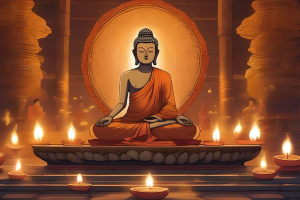




Balangir : 24 June 2023 : Buddha, as a wandering monk, visited many places during his lifetime. Thus, places visited by Buddha hold an important position in Buddhism. Here we will discuss more the Places Associated with Buddha’s Life.
Eight important holy locations related to the life of Buddha are known as Astamahasthanas.
Lumbini, Bodhgaya, Sarnath, and Kushinagara are among the four pilgrimage sites associated with Gautama Buddha’s life, as are Sravasti, Sankasya, Rajgir, and Vaishali.
Gautama Buddha was born in Lumbini, located in modern-day Nepal, and nurtured in Kapilavastu, according to Buddhist legend. He attained enlightenment in Bodh Gaya, spoke his first sermon at Sarnath, and died in Kushinagar, according to Buddhist legend.
Buddha traveled to the kingdoms of Kosala and Magadha. Kapilavastu, Rajgriha, Vaishali, Bodh Gaya, Sarnath, Kosambi, Shravasti (Kosala Kingdom capital), Kushinagar, Nalanda, Mathura, Varanasi, Saket, Champapuri, and more locations are visited under these two kingdoms.

Some of the important places, Buddha visited are:
Kapilavastu
Kapilavastu was a city in Ancient India that served as the capital of the Shakya clan. King Suddhodana and Queen Maya, as well as their son Prince Siddartha Gautama, are said to have resided in Kapilavastu until he departed at the age of 29.
It was the capital of the Shakyas, over whom his father governed; Buddhist sources such as the Pali Canon suggest that Kapilavastu was Gautama Buddha’s boyhood home. Siddhartha Gautama spent the last 29 years of his life at Kapilavastu.
Rajgir, Bihar
Rajgir (historically known as Rajagriha) is known as “The City of Kings.” During the 5th century BC, Buddha preached their ideas at Rajgir, and king Bimbisara provided him with a forest monastery. As a result, Rajgir became one of the most prominent preaching places for the Buddha. It was here that Budhha delivered his famous Atanatiya Sutta.
The capital of the kingdom of Magadha, which would later become the Mauryan Empire, was the city of Rajgir. Buddha preached their views in Rajgir around the 6th and 5th centuries BC, and King Bimbisara offered the Buddha a wood monastery.
Vaishali, Bihar
Vaishali is a great Buddhist pilgrimage. It is said that the Buddha visited this place thrice and spent quite a long time here. The Buddha also delivered his last sermon at Vaishali and announced his Nirvana here.
King Kalasoka convened the Second Buddhist council here in 383 BCE, making it an important place in both the Jain and Buddhist religions. Gautama Buddha preached his final sermon here before his death in 483 BCE, and the Second Buddhist council was convened here by King Kalasoka in 383 BCE
Vaishali is also home to the Buddha relic stupa, which is supposed to contain the Buddha’s ashes and is arguably the earliest known example of a stupa.

Bodh Gaya, Bihar
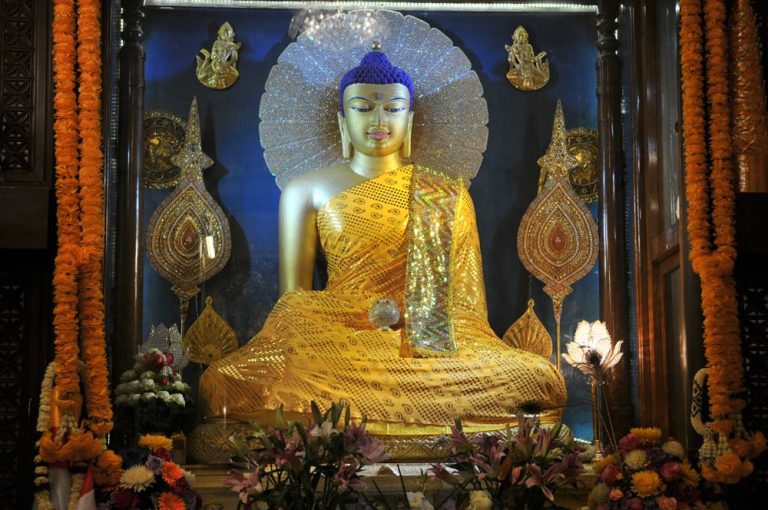
Bodh Gaya is a holy landmark and pilgrimage destination linked with the Mahabodhi Temple Complex in Gaya, Bihar. It is well-known for being the location where Gautama Buddha is claimed to have acquired Enlightenment (Pali: bodhi) under the Bodhi Tree.
Bodh Gaya has been a place of devotion and veneration for Buddhists since antiquity. The Mahabodhi Temple Complex is one of the four sacred locations associated with the life of the Lord Buddha, particularly his enlightenment (Bodhi). The Mahabodhi Temple site contains outstanding records of the events surrounding Buddha’s life and subsequent adoration.

Sarnath, Uttar Pradesh
Sarnath is one of the holiest Buddhist places in the world, as it is the site of Gautama Buddha’s first Sermon. It remained a center of profound learning, a destination of pilgrimage, and a vihara (monastery) for monks and students for approximately 1,700 years, from then until the 12th century CE.
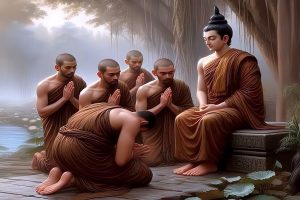
Sarnath is the site of Gautam Buddha’s first sermon, when he taught the four noble truths and the eightfold path known as Dhamma, as well as establishing a monastic society known as Sangha. You’ll also find centuries-old stupas and relics here. The Ashok Pillar and the Indian National Emblem are two additional noteworthy sights to view here.
Kosambi, Uttar Pradesh
By the time of Gautama Buddha, Kosambi was a thriving city with a high number of affluent merchants. It was a vital crossing point for commodities and persons from the north and south. It is mentioned frequently in the stories of Buddha’s life.
Udayana was a Buddhist upasaka, and Gautama Buddha visited Kaushambi multiple times throughout his reign in order to promote the dharma, the Noble Eightfold Path, and the Four Noble Truths.
Sravasti, Uttar Pradesh
It is revered to Buddhists since it was here that Lord Buddha performed the greatest of his miracles to confuse the Tirthika heretics. Among these wonders is Buddha’s creation of numerous pictures of himself, which has long been a popular motif in Buddhist art.
To persuade non-believers, Buddha demonstrated his heavenly power. Sravasti was where the Buddha spent most of his monastic life. Sravasti (ancient Savatthi), the historical capital of Kosala Mahajanapada, is a major Buddhist pilgrimage site. Lord Buddha and his disciples are said to have spent 24 years preaching in this city. There are various ancient stupas, monasteries, and temples in this city.

Kushinagar, Uttar Pradesh
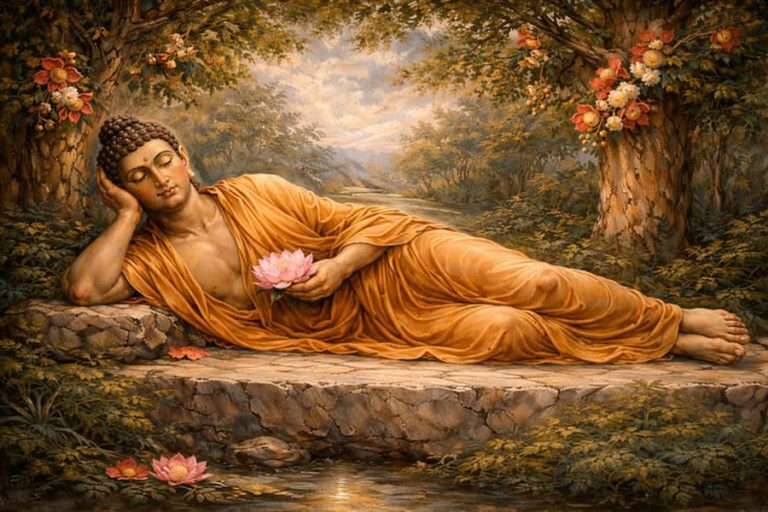
Kushinagar is one of Lord Buddha’s four holy locations. In 483 BC, he obtained Mahaparinirvana (salvation) and was buried at Ramabhar Stupa.
Lord Buddha is said to have accomplished ‘Maharparinivana,’ the highest level of salvation, in Kushinagar. One of the main attractions is the Ramabhar Stupa, which stands about 50 feet tall and is located where Lord Buddha was cremated.
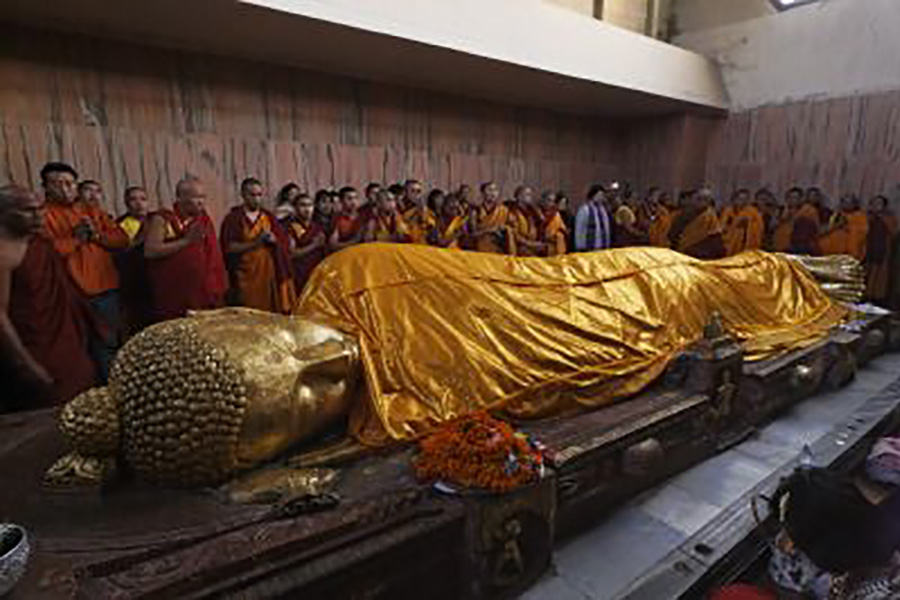
Mahanirvana Temple, which houses a six-metre-long reclining Buddha statue; Mathakuar Temple, which houses a black stone image of the Buddha with inscriptions dating from the 10th to 11th centuries.

Nalanda, Bihar
In his wandering life, Buddha is said to have visited a village near Rajagriha named Nalanda, according to early Buddhist writings. He gave talks at a neighboring mango grove called Pavarika, and Shariputra, one of his two main pupils, was born there and subsequently gained nirvana there.
In ancient Magadha, Nalanda was a prominent Buddhist monastic university. Historians consider it to be the world’s first residential university, as well as one of the greatest centres of study in antiquity.
During the Gupta Empire, Nalanda was founded with the help of several Indian and Javanese benefactors, both Buddhists and non-Buddhists. Its faculty featured some of Mahayana Buddhism’s most illustrious scholars throughout the course of 750 years.
The Hindu Vedas and its six philosophies, as well as grammar, medicine, logic, and mathematics, were taught at Nalanda Mahavihara, as were six important Buddhist schools and philosophies such as Yogacara and Sarvastivada.
Conclusion
Buddha travelled to several places throughout his life as a traveling monk. As a result, the places visited by Buddha are honoured in Buddhism. In India, there are several ancient Buddhist pilgrimage sites.